Brushes & dusters
Three different jobs live in this category, and one brush cannot do all of them.
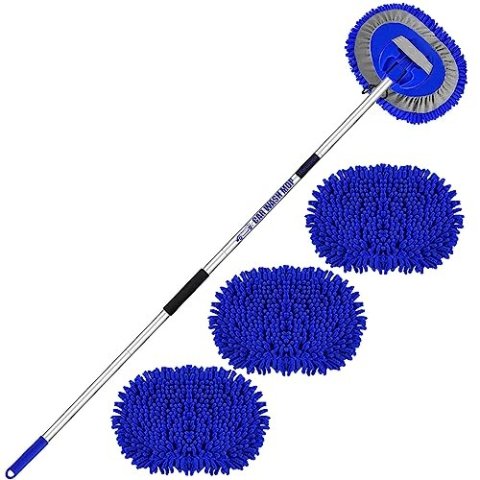
Washing, detailing and dusting look similar from the outside. They are not the same task, and the tool that suits one of them can mark paintwork on another. A soft chenille mop on a long handle is built to carry shampoo and water across a roof. A short ultra-soft brush is built to reach a badge recess or an air vent. A dry microfibre duster is built to lift settled dust from a car that is already clean.
Start by naming the job, then choose the head and the reach. Choosing by price or by piece count first is what produces a drawer of brushes that never quite fit the work.
Detailing brushes
Short handle
Wet or dry
Tight areas
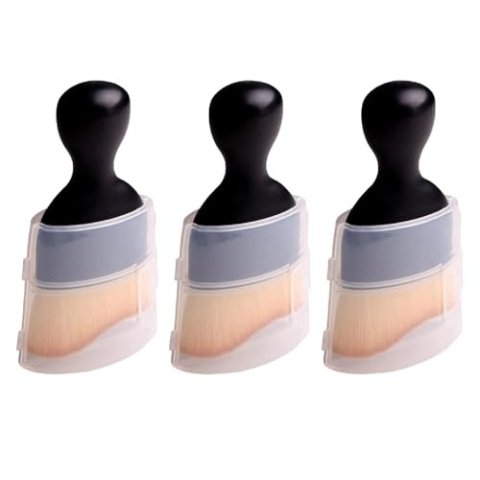
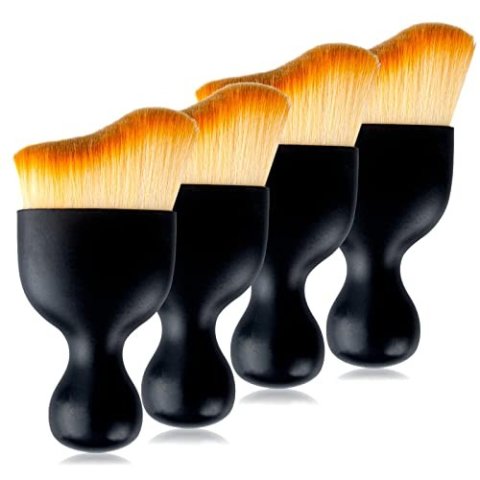
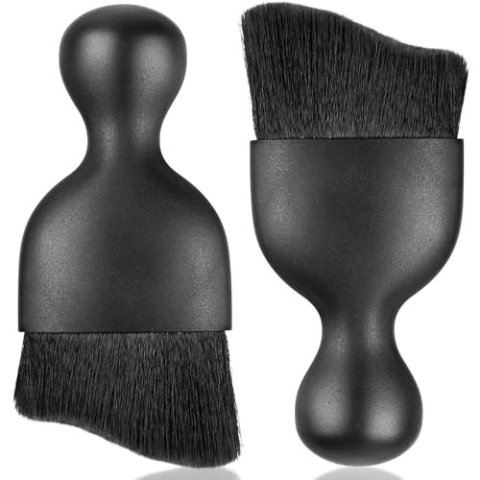
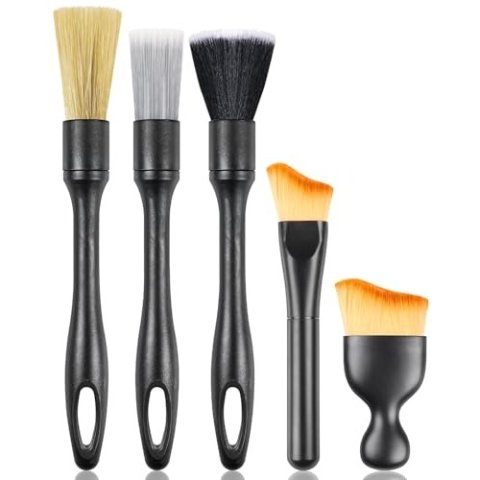
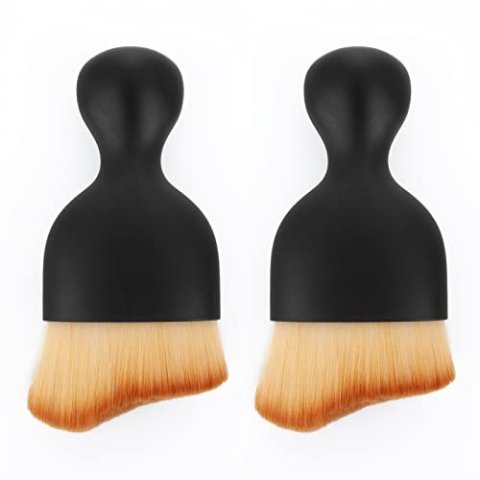
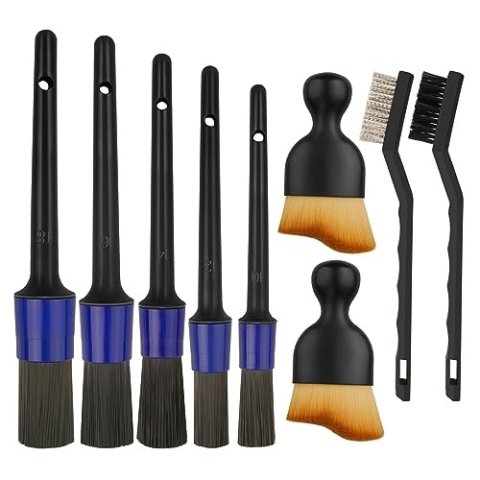
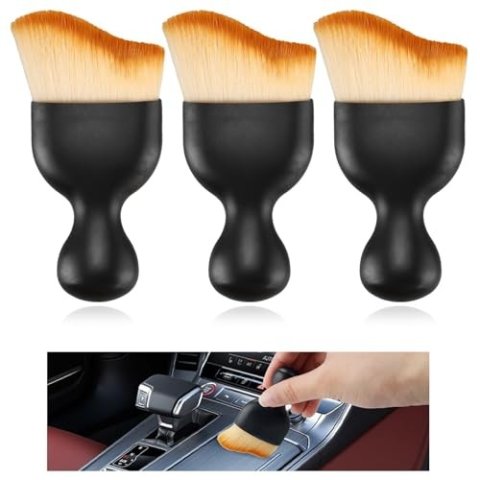
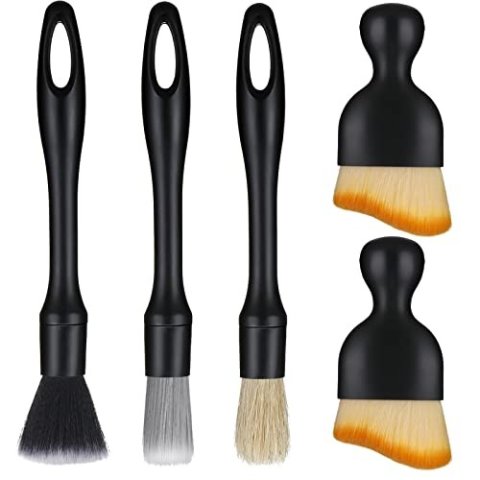
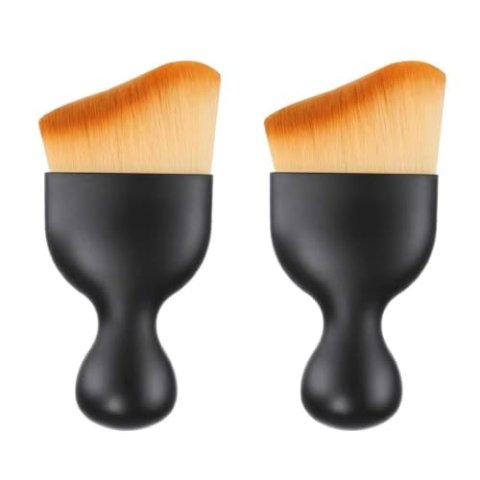
Small ultra-soft or natural-bristle brushes for badges, grilles, vents, trim seams, wheel nut recesses and dashboards. Usually sold as multi-piece sets so you can keep a clean brush for interiors and a separate one for wheels.
Car detailing brushes
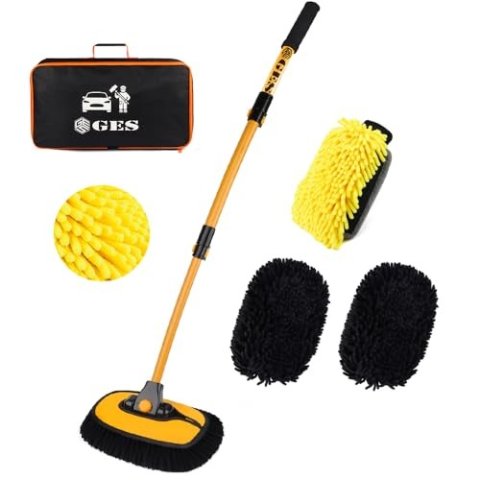
Telescopic wash brushes
Extendable
Needs water
Roofs and panels
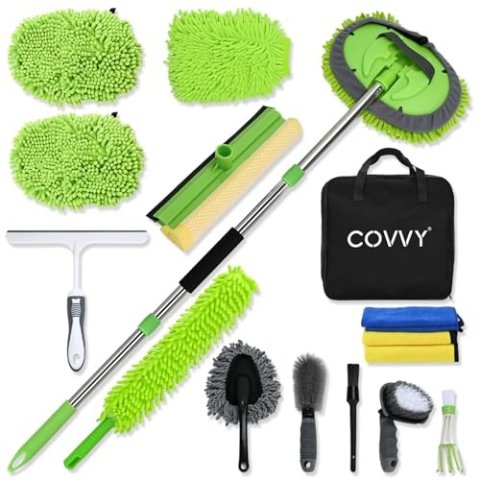
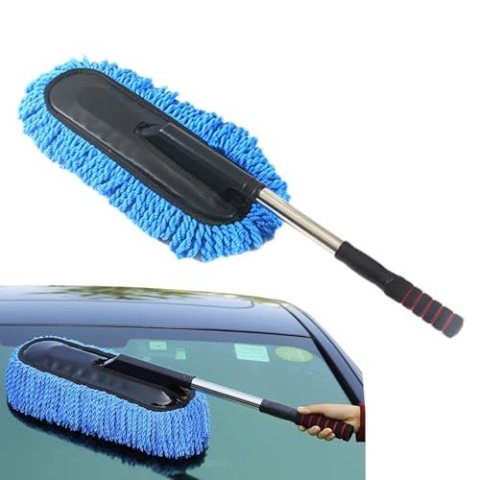
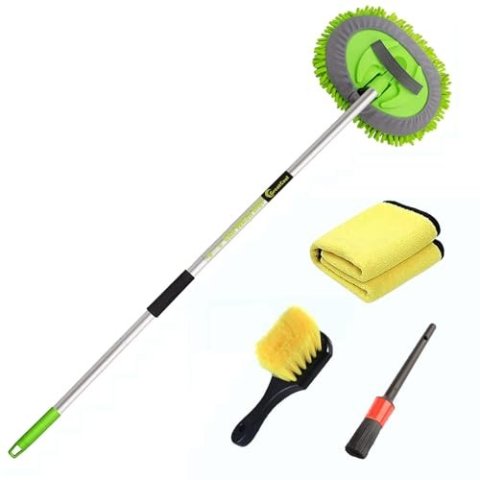
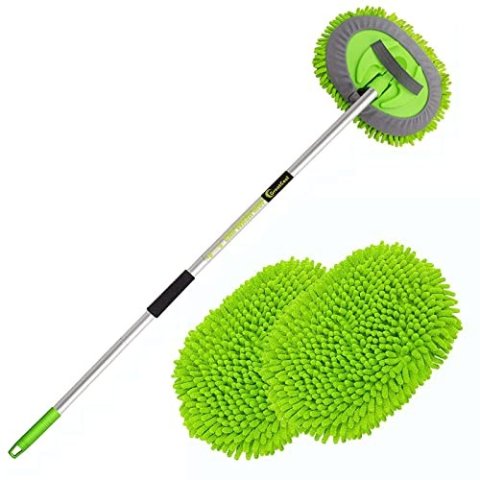
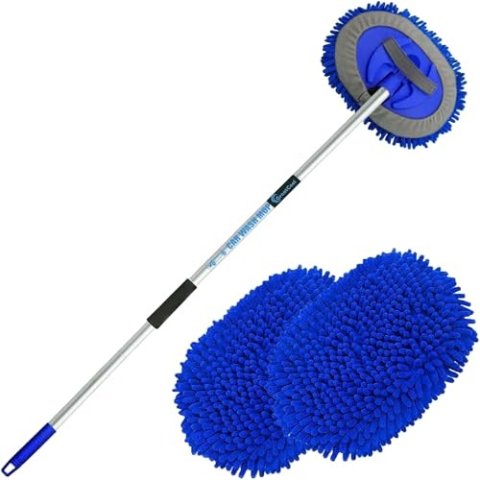
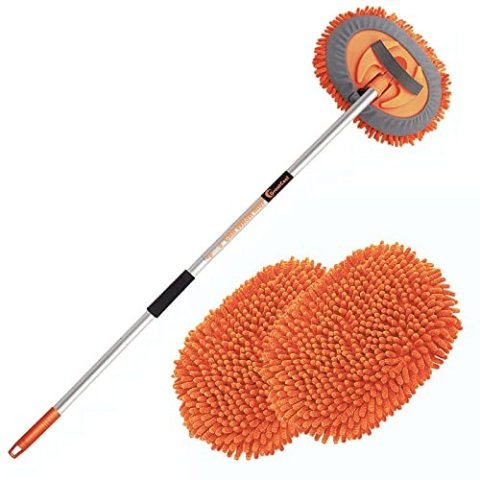
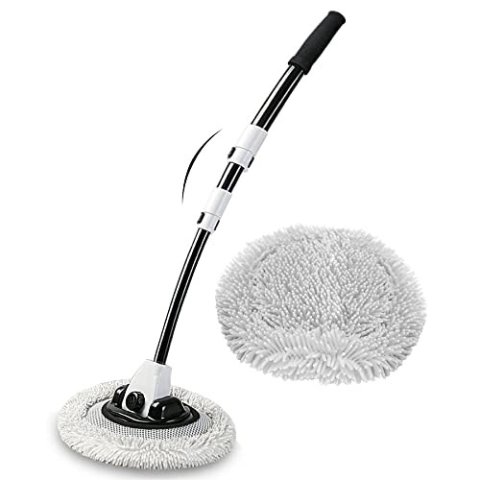
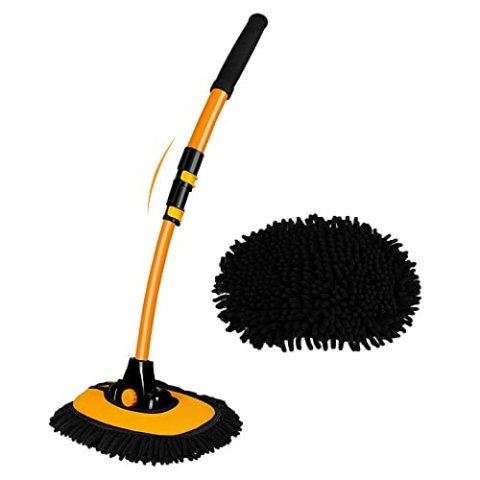
Chenille or microfibre mop heads on an aluminium handle that extends, so roofs, windscreens and van sides can be washed from the ground. Designed to be used loaded with shampoo and water, not dragged over a dry car.
Telescopic car wash brushes
Car dusters
Dry use
Light dust
Between washes
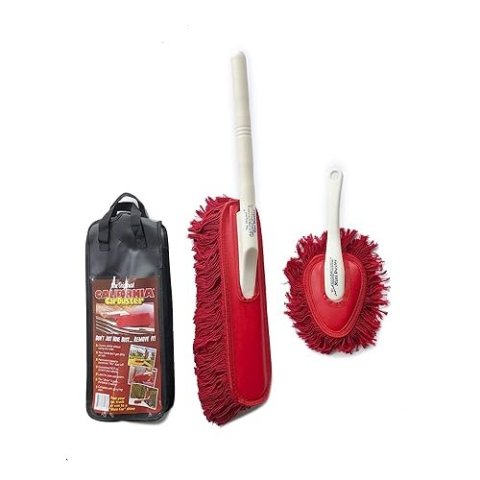
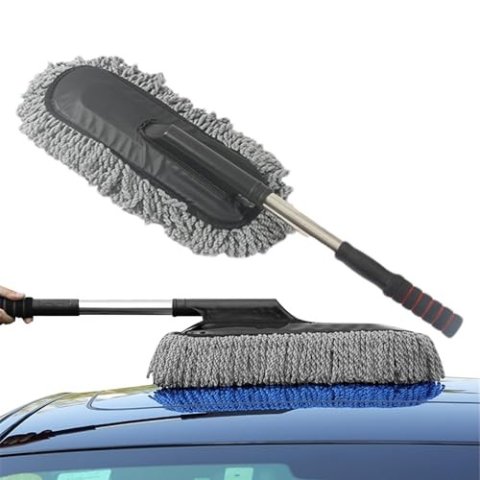
Noodle-style microfibre heads for lifting pollen and settled dust from a car that is otherwise clean. A duster is a between-washes tool, not a substitute for a wash.
Car dusters
Head material
The head decides what the brush is safe to touch.
Handle length changes where you can reach. The head material changes what you can reach for without leaving marks. Most of the range here uses one of a small number of head types, and each one has a job it does well and a job it does badly.
Chenille and microfibre heads hold water and shampoo, so they suit washing large painted panels. Ultra-soft synthetic filaments flex into recesses without pressing grit into a surface, so they suit detail work. Natural bristle, usually boar hair, is chosen for soft dry work and for interior surfaces. Stiffer nylon is for wheels, arches and tyre walls, where the dirt is heavier and the surface is not show paint.
If a listing does not say what the bristles are made from, treat it as unknown rather than as soft. On paintwork that matters, that distinction is the whole decision.
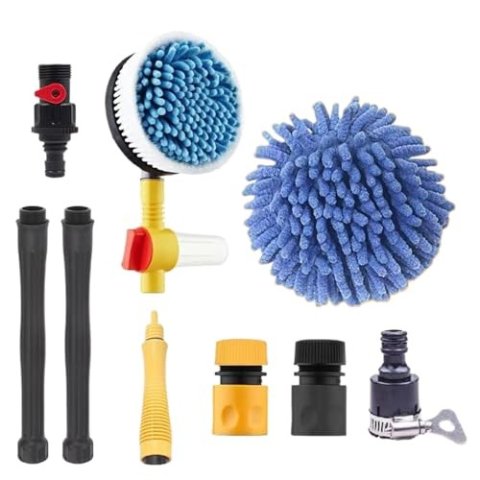
Chenille or microfibre mop
Holds shampoo and water well and spreads it over painted panels. Best on a wet, pre-rinsed car. Rinse the head often so trapped grit does not travel back across the paint.
Ultra-soft synthetic detailing brush
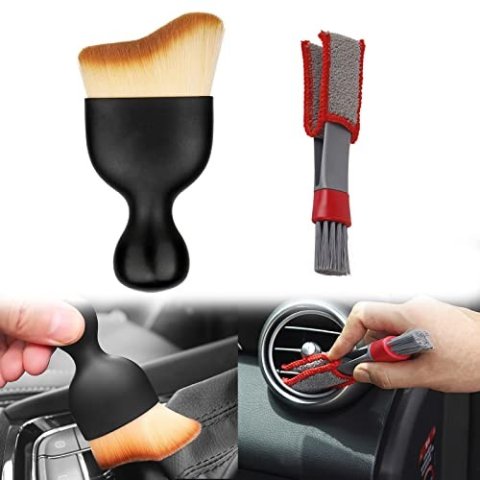
Flexible filaments for badges, grilles, emblems, window rubbers and vents. Works wet with shampoo or all-purpose cleaner, and dry for light interior dusting.
Natural bristle, usually boar hair
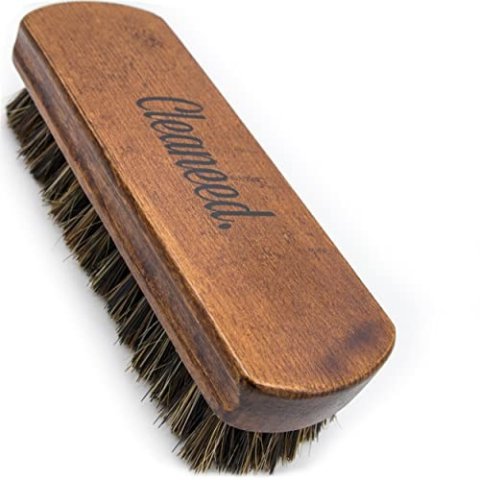
Chosen for soft dry work and interior surfaces such as dashboards, leather grain and switchgear. Natural hair holds water differently from synthetic, so check the listing before using it wet.
Stiffer nylon wheel and tyre brush
For wheel faces, barrels, arches and tyre walls. Keep these brushes away from paintwork and keep them out of the same bucket as your paint-safe tools.
Noodle microfibre duster
Long microfibre strands that lift settled dust from a clean car. The head is usually washable and reusable. Not intended for mud, road film or salt.
Vent, crevice and cabin brushes
Narrow heads for air vents, seat rails, cup holders, seams and other cabin gaps. Often the smallest pieces in a set, and the ones most worth keeping separate from exterior use.
Avoiding marks
Most brush damage is grit, not bristles.
Scratches from a brush are usually caused by dirt the brush picked up and then dragged, rather than by the brush itself. The habits that prevent it are simple and they matter more than which model you buy.
Rinse loose dirt off the car before any brush touches it, and rinse the brush head as you work.
Do not dry-dust a car that is gritty or salted. A duster is for light dust on an otherwise clean surface.
Keep wheel and tyre brushes separate from paint and interior brushes, including separate storage.
Let the head carry the pressure. Pressing a brush harder is what turns trapped grit into a mark.
Check what the maker says about matte finishes, wraps and carbon fibre before using a brush on them, and test a small area first.
Wash and dry brush heads after use, then store them so the bristles are not bent against a surface.
Reach and handles
Extendable is about where you stand, not about how clean the car gets.
- Decide the highest point you actually need to reach, then read the extended length in the listing rather than the headline description. A handle quoted at its maximum is not the length you will comfortably work at.
- Check how the head sits at an angle. Roofs and curved bonnets need a head that can lie flat against the panel, which is why many of these handles pivot.
- Check whether the handle is meant to feed water. Only a small number of handles connect to a hose; most are designed to be dipped into a bucket instead.
- Consider storage before buying. A long handle that does not collapse short enough for your boot or shelf tends to stop being used.
Sets versus single brushes
A set is useful when the pieces do different jobs.
Multi-piece sets make up a large part of this category, and they are genuinely convenient when the sizes differ enough to cover interior gaps, exterior recesses and wheel areas. They are less useful when several pieces are near-duplicates in different colours, which leaves you buying one brush you use and several you do not.
Read the piece breakdown rather than the piece count. If the listing does not describe what each brush in the set is for, a smaller set of clearly different sizes is usually the better buy. Product specifications, current availability and delivery details are shown on Amazon, so check the listing before ordering.