

Pad face diameter
Confirm the pad's working face and the backing plate it is designed to cover. Similar product titles can hide different measurements.
 Brake CareShop the complete range
 Cleaning KitsShop the complete range
 Fillers, Adhesives & SealantsShop the complete range
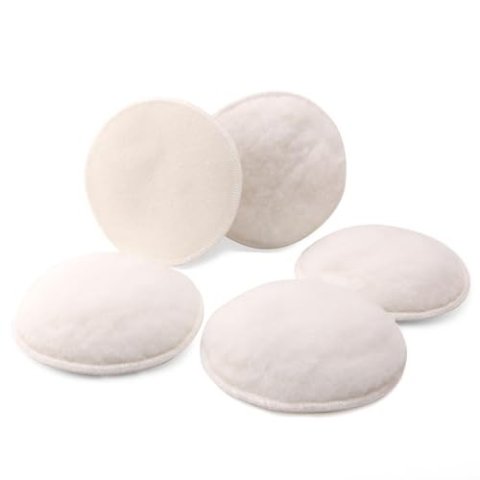 SPTA 125 mm Wool Polishing Pads, 5 Pack, Ultra Fine 80#
£25.26
In stock
SPTA 125 mm Wool Polishing Pads, 5 Pack, Ultra Fine 80#
£25.26
In stock
 SPTA 150 mm 5-Piece Flat Polishing Sponge Pad Set
£26.49
In stock
SPTA 150 mm 5-Piece Flat Polishing Sponge Pad Set
£26.49
In stock
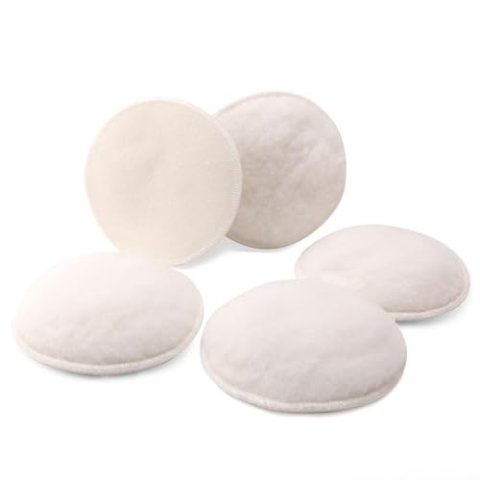 SPTA 150 mm Wool Polishing Pad Set, 5 Pack
£21.46
In stock
SPTA 150 mm Wool Polishing Pad Set, 5 Pack
£21.46
In stock
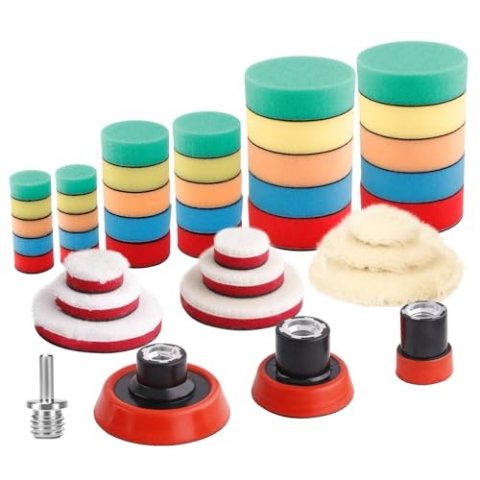 SPTA 36-Piece Polishing Pad Set for Drill with M14 Adapter
£29.99
In stock
Save 15%
SPTA 36-Piece Polishing Pad Set for Drill with M14 Adapter
£29.99
In stock
Save 15% 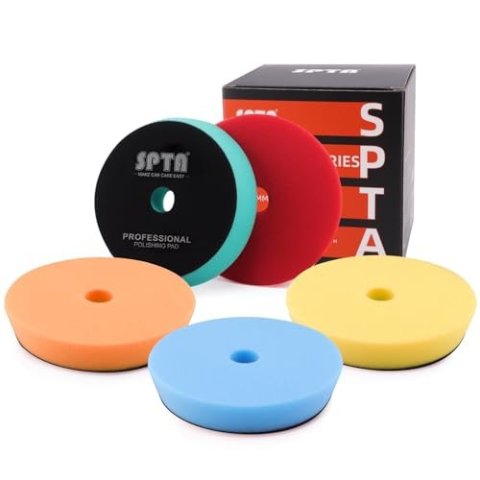 SPTA 5-Piece 125mm Foam Polishing Pad Set for DA/RO Polishers
£22.94
SPTA 5-Piece 125mm Foam Polishing Pad Set for DA/RO Polishers
£22.94SPTA pad-set guide
SPTA polishing pad sets can combine different diameters, foam textures, wool pads, face shapes and attachment formats. The useful set is the one that fits your backing plate and covers the cutting, polishing, finishing or waxing stages you actually plan to use.
Pad colours are not a universal industry code. Use the current product listing or the chart supplied with that specific set to identify its pad order. A colour that indicates a firmer pad in one kit may not mean the same thing in another.

Confirm the pad's working face and the backing plate it is designed to cover. Similar product titles can hide different measurements.
The attachment diameter and hook-and-loop area must suit the machine setup. “For a 5-inch machine” is not enough detail on its own.
Foam density and face shape influence how a pad behaves, but the set-specific description must define its intended stage.
Wool options are commonly selected for stronger correction work, but they require suitable liquid, technique and finish refinement.
Face design changes contact and airflow. Choose it as part of the complete pad-and-product system rather than as a cosmetic preference.
Count how many genuinely useful pads and adapters the set contains, including duplicates for pad rotation during a longer job.
Compatibility first
Check whether the set is described for your dual-action, rotary, random-orbit, drill-adapter or hand-use setup.
Confirm the listed backing-plate size, attachment diameter and pad face rather than estimating from the product photo.
Match compound, polish or finishing product to the intended pad in that exact set.
Inspect the finish and begin with a conservative test combination. A firmer pad is not automatically the correct answer.
Longer work may require several clean pads of the same type so residue and heat do not build up in one pad.
Check whether you can buy the useful size and grade again without replacing the whole mixed set.


Set comparison
| Listing detail | What it helps you decide | Common mistake to avoid |
|---|---|---|
| Pad and backing-plate measurements | Whether the set physically fits and leaves suitable edge coverage. | Matching only the nominal machine size. |
| Set-specific colour or grade chart | Which pad the seller assigns to correction, polishing or finishing. | Applying a universal colour rule. |
| Foam, wool, bonnet or adapter content | Which stages and tools the kit can genuinely support. | Counting every piece as an interchangeable polishing pad. |
| Quantity per useful grade | Whether you can rotate clean pads across a larger vehicle. | Expecting one pad to complete a long correction session. |
Using and caring for pads
Read the product listing or included chart before assigning a pad to cutting, polishing or finishing.
Check that the pad is attached evenly and is not damaged, distorted or contaminated.
Start conservatively, inspect the result and increase correction only when the paint and defect justify it.
Clean or change pads as the product and removed residue build up; do not continue with a saturated face.
Keep used and clean pads separate and allow washed pads to dry fully without distorting the foam or attachment layer.
Related pad routes
Browse broader Polishing Pad Sets, dedicated Foam Polishing Pads, Wool Polishing Pads and the full Buffing & Polishing Pads range. The individual product page is the authority for SPTA colour roles and dimensions.
Brand
Pad Material
Tool Type
Surface
Use Case
Product Type