
Wheel brush buying guide
Choose brushes for the wheel you have, not the biggest kit on the shelf
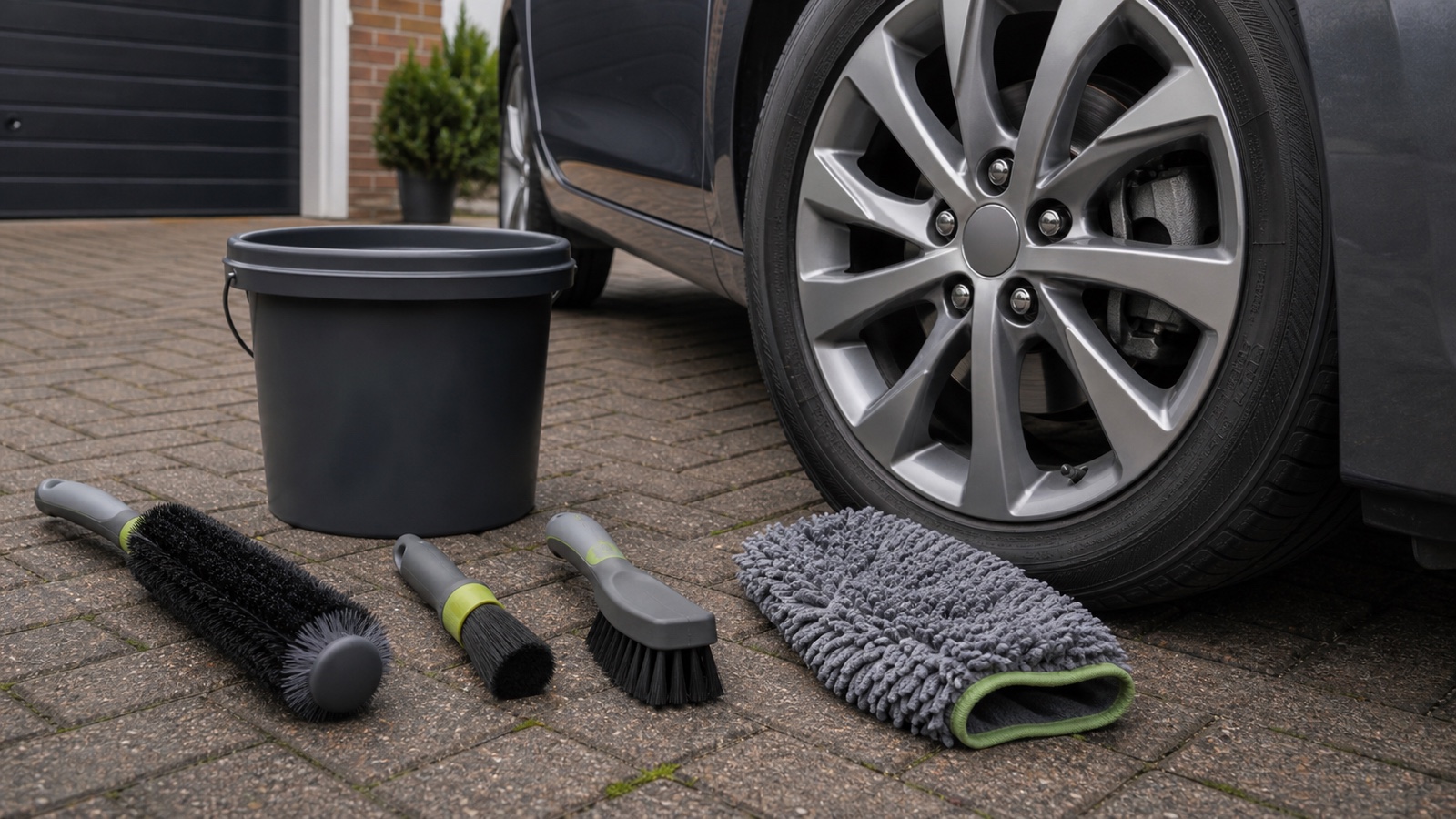
A useful wheel cleaning brush kit covers four different jobs: the wheel face, the barrel behind the spokes, small recesses around the wheel nuts and the tyre sidewall. This guide shows which brush shape fits each area and when extra pieces are genuinely useful.
Quick answer
Most drivers need a soft face tool, a long barrel brush and a separate tyre brush. Add a small detailing brush for multi-spoke wheels and tight wheel-nut recesses.
Open five-spoke wheels may only need two or three tools. Intricate wheels often justify a kit with more than one barrel-brush size. Whatever you choose, keep wheel and tyre tools away from bodywork, inspect protective tips before use and check that your cleaner suits the wheel finish.
Use a soft face brush or microfibre mitt for the broad visible surfaces.
Use a long, flexible wheel woolie or barrel brush to reach behind spokes.
Use a small detailing brush around wheel nuts and intricate spoke junctions.
Use a dedicated firmer brush that never returns to the alloy face or paint.
Match the brush to the part of the wheel
One large brush rarely does every job well. A broad brush can be quick on the face but too bulky behind narrow spokes. A slim barrel brush can reach deep into the wheel but may be slow across wide surfaces. A stiff tyre brush can shift sidewall grime, yet it is the wrong tool for a delicate alloy finish.
The most useful kit is therefore not the one with the highest piece count. It is the smallest set that reaches every area of your own wheels without forcing one brush to do a job it was not designed for.
| Wheel area | Brush to look for | Useful feature | Avoid |
|---|---|---|---|
| Face and broad spokes | Soft face brush or microfibre wheel mitt | Broad contact area, soft material and a handle that stays clear of the finish | Stiff tyre bristles, exposed metal or heavy pressure |
| Inner barrel | Long flexible barrel brush or wheel woolie | Enough reach for the back of the wheel, with a protected tip and shaft | Forcing an oversized head past a narrow spoke or calliper gap |
| Wheel nuts and spoke junctions | Small detailing brush | A compact head that works inside recesses without hard parts touching the wheel | A dirty general-purpose brush with trapped grit |
| Tyre sidewall | Dedicated firmer tyre brush | Shorter, stiffer bristles and a grip that gives controlled agitation | Using the same tool on the alloy face or bodywork |
Start with your wheel design
Open five-spoke wheels
A soft face tool and one medium or large barrel brush may cover most areas. Add a tyre brush if you clean and dress the sidewalls.
Compare wheel cleaning kitsTight multi-spoke wheels
Look for two barrel-brush sizes plus a small detailing brush. The slimmer tools should reach spoke gaps and wheel-nut recesses without being forced.
Browse brush kitsFull wheel and tyre routine
Choose a set that separates soft wheel tools from a firmer tyre brush. A dressing applicator is useful only if tyre finishing is part of your routine.
Explore tyre careProducts to compare
Wheel cleaning brush kits to compare
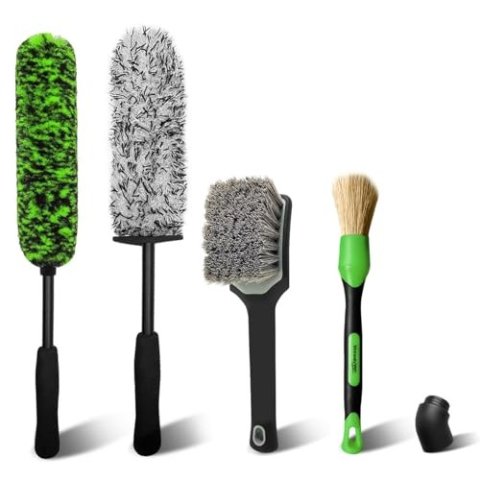 YeewayVeh 4-Piece Wheel and Tyre Cleaning Kit, Green
£17.99
In stock
Save 5%
YeewayVeh 4-Piece Wheel and Tyre Cleaning Kit, Green
£17.99
In stock
Save 5% 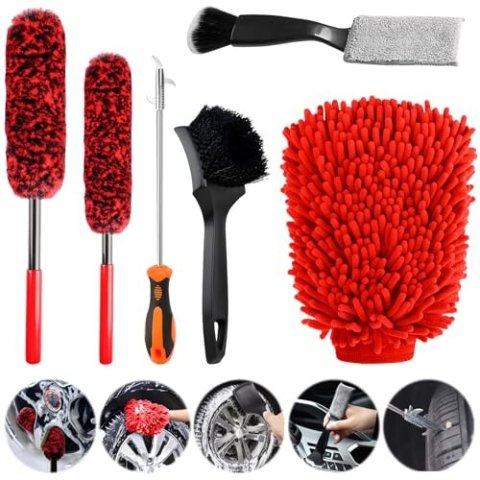 Kazaigou 6-Piece Car Wheel Cleaning Brush Kit with Microfiber Wheel Woolies, Wash Mitt and Stone Remover Hook
£11.36
Kazaigou 6-Piece Car Wheel Cleaning Brush Kit with Microfiber Wheel Woolies, Wash Mitt and Stone Remover Hook
£11.36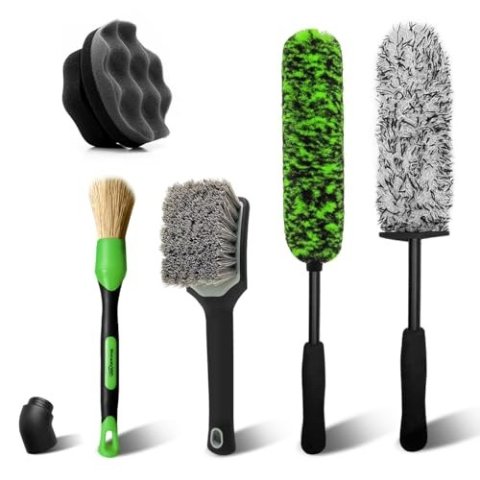 YeewayVeh 5-Piece Pro Wheel Detailing Kit, Green
£19.94
In stock
YeewayVeh 5-Piece Pro Wheel Detailing Kit, Green
£19.94
In stock
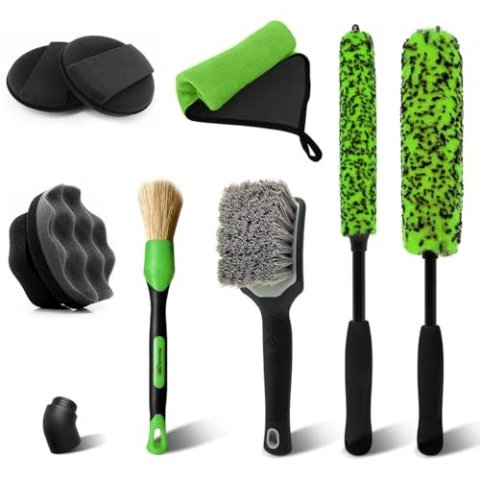 YeewayVeh 8-Piece Wheel and Tyre Brush Kit, Green (4 Pack)
£20.99
In stock
YeewayVeh 8-Piece Wheel and Tyre Brush Kit, Green (4 Pack)
£20.99
In stock
Barrels and behind the spokes
Reach matters more than brush diameter
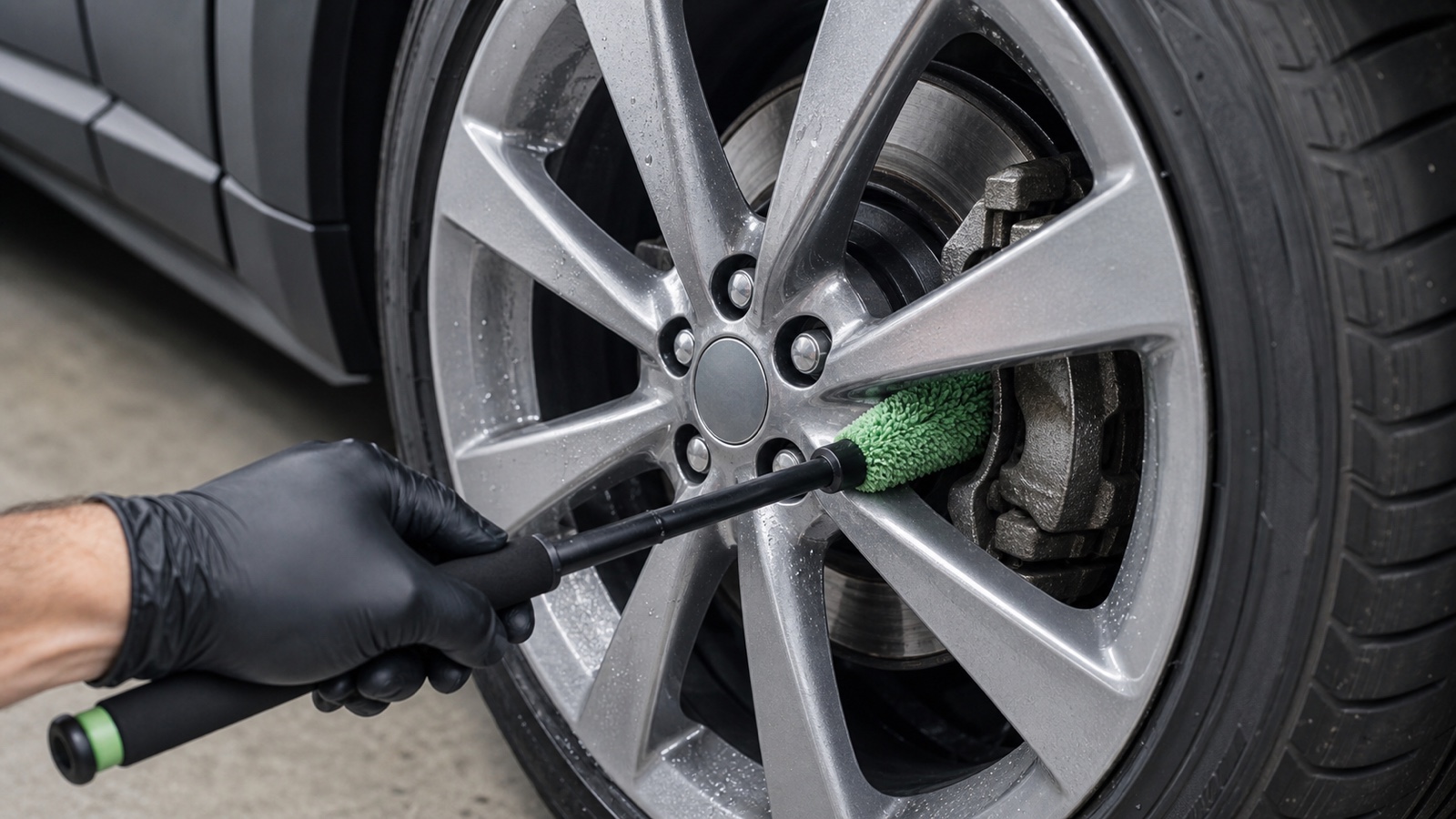
The inner barrel is the broad surface behind the wheel face. It collects brake dust and road grime but can be difficult to reach with a mitt or short face brush. A long wheel woolie or flexible barrel brush is designed for this access problem.
Check both length and head size. A large head can clean open barrels quickly, while a slimmer brush is more useful through narrow spoke gaps or around a large brake calliper. If the brush has to be forced, step down a size rather than pushing harder.
Wheel nuts and tight gaps
A small detailing brush solves the jobs a barrel brush misses
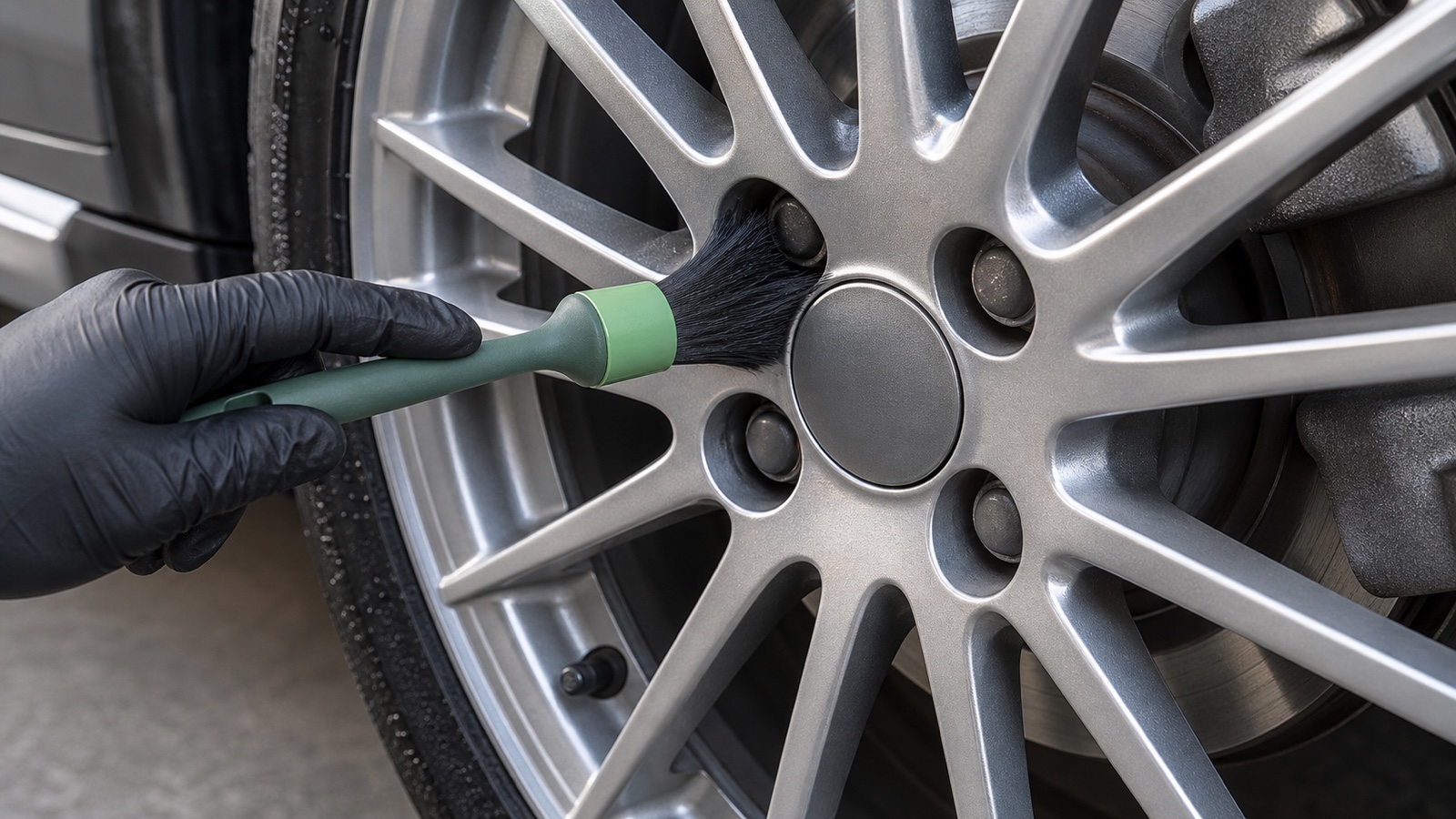
Wheel-nut recesses, valve areas and the narrow points where spokes meet the rim need control rather than reach. A compact detailing brush lets you agitate these areas without bending a large brush into an awkward angle.
Look for a head that fits the recess and a construction that keeps metal or hard edges away from the wheel. Rinse the brush often so loosened grit does not stay trapped in the bristles. If you also use detailing brushes inside the car, keep the wheel set clearly separate.
Piece count versus useful coverage
A six-piece kit is not automatically better than a four-piece kit
Extra pieces are useful when they add a smaller barrel brush, a dedicated tyre brush, a wheel-nut brush or a separate dressing applicator. Duplicate brushes, storage accessories and tools for jobs you do not perform should not decide the purchase. List your wheel areas first, then check each item in the kit against that list.
| Brush type | Best suited to | Main advantage | Trade-off |
|---|---|---|---|
| Microfibre wheel woolie | Barrels, broad openings and regular maintenance cleaning | Soft head holds cleaning solution and covers a useful area | A large head may not fit narrow spokes or tight calliper gaps |
| Flexible bristle barrel brush | Behind spokes, curved access routes and awkward barrel areas | Flexible shape and good reach | Can flick cleaner back towards the user; tip and shaft protection matter |
| Small detailing brush | Wheel nuts, valves, badges and intricate spoke junctions | Precise control in small recesses | Too slow for the whole wheel face or barrel |
| Stiff tyre brush | Tyre sidewalls and heavier rubber grime | More agitation where a soft wheel brush may be ineffective | Should not be used on delicate wheel faces or bodywork |
| Wheel mitt | Broad faces, open spokes and controlled hand cleaning | Direct feel and broad surface coverage | Limited reach into deep barrels and narrow recesses |
Keep tools separate
The tyre brush, wheel brushes and bodywork mitt should never become one shared set
Wheel tools collect brake dust, road grit and small stones. A tyre brush is also intentionally firmer than the tools used on a finished wheel face. Reusing either one on paintwork creates an avoidable risk of dragging abrasive contamination across the body.
Colour-code the tools or store them in separate bags. Rinse wheel brushes during the clean and again when the job is finished. Let them dry before storage, and replace any brush with trapped grit, a damaged protective tip or exposed internal wire.
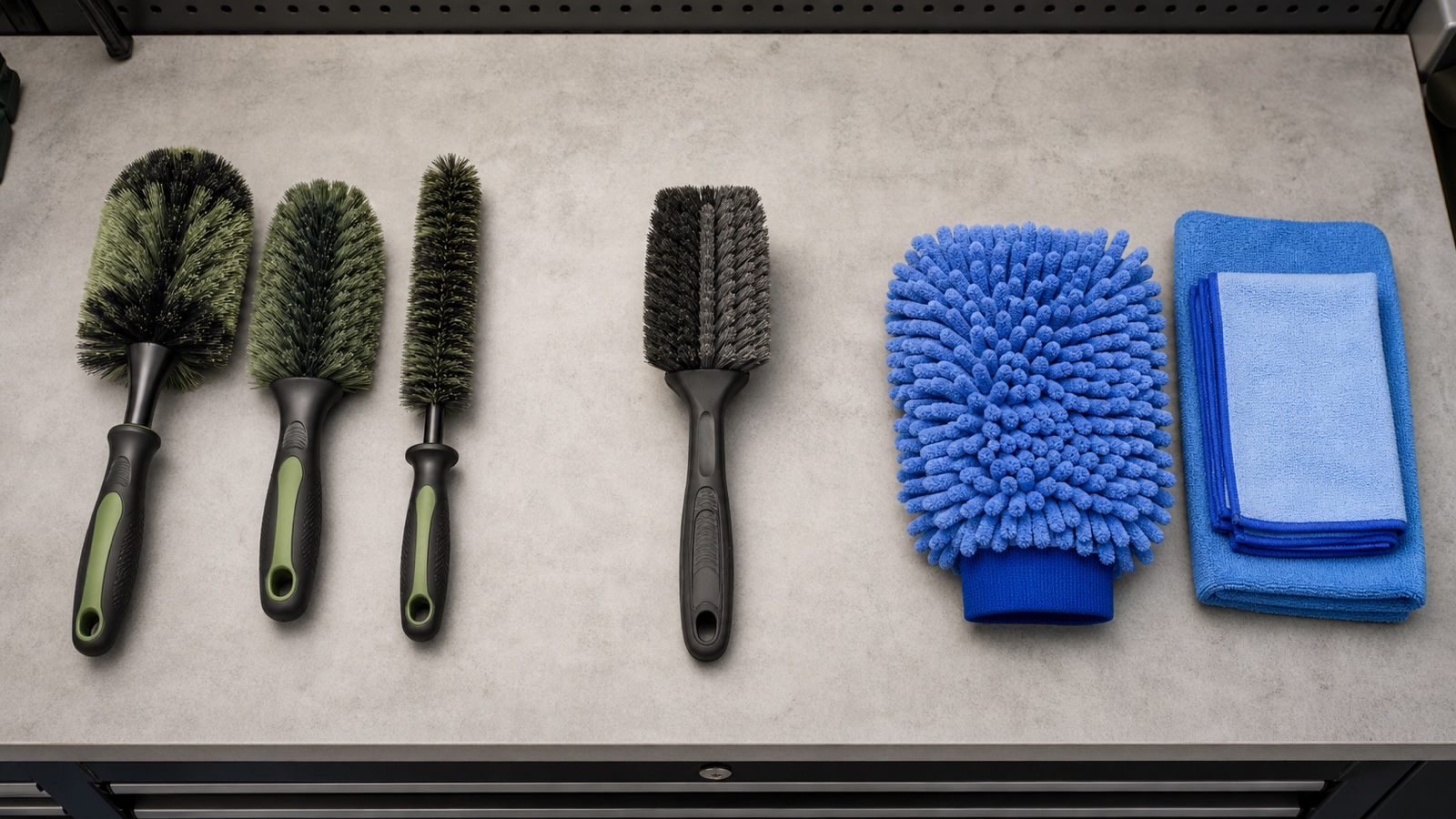
Check these details before buying a wheel brush kit
Reach
Measure the access through your spokes and consider how far the brush must reach into the barrel.
Head sizes
Multi-spoke wheels benefit from at least one slim brush rather than several brushes of similar width.
Softness and stiffness
Keep softer tools for finished wheel surfaces and a clearly separate firmer brush for tyre sidewalls.
Protected hard parts
Inspect the tip, shaft and handle so hard edges are less likely to contact the wheel during use.
Cleaning and drying
Choose tools that can be rinsed thoroughly and dried without the heads staying compressed or dirty.
Only useful extras
A dressing applicator, wash mitt or storage bag adds value only when it matches your normal routine.
Avoid these mistakes
Do not use more force to compensate for the wrong brush
Do not push an oversized head through a tight gap, use a stiff tyre brush on the alloy face, reuse gritty wheel tools on paint or continue with a damaged brush that exposes hard parts. Be cautious with drill-brush attachments on delicate finishes. Check the wheel and cleaner instructions, and test a new product in an inconspicuous area before treating the full wheel.
Pair the brush with a cleaner that suits the wheel finish
A brush provides controlled agitation; the cleaner helps loosen brake dust and road grime. Neither choice should be made in isolation. Read the cleaner label, confirm compatibility with the wheel finish and follow its application and rinsing instructions rather than copying a generic dwell time.
Painted, polished, chrome, diamond-cut, coated or already damaged wheels may need different care. Acid-free positioning can be useful, but it does not remove the need to check the label or test the method. Browse wheel and tyre cleaners only after you know which finish you are working on.
Products to compare
Wheel cleaners to pair with the right brush
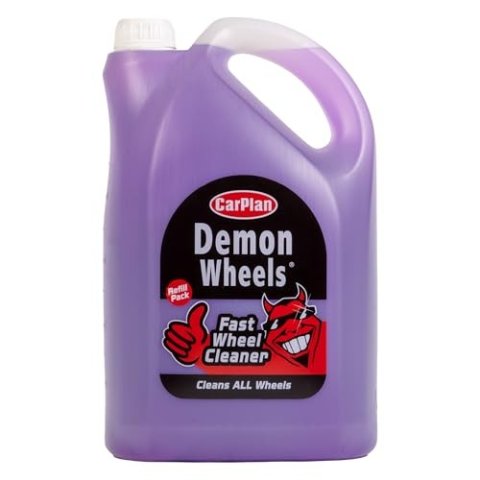
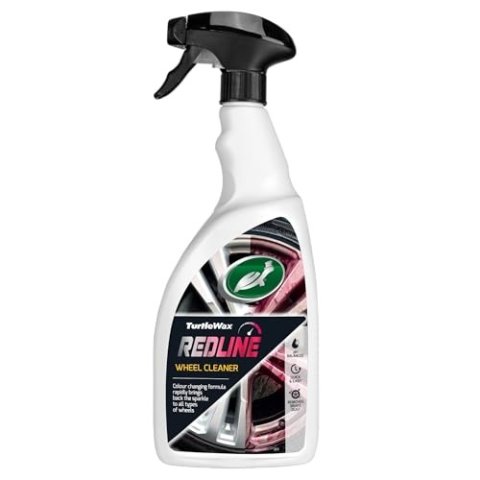
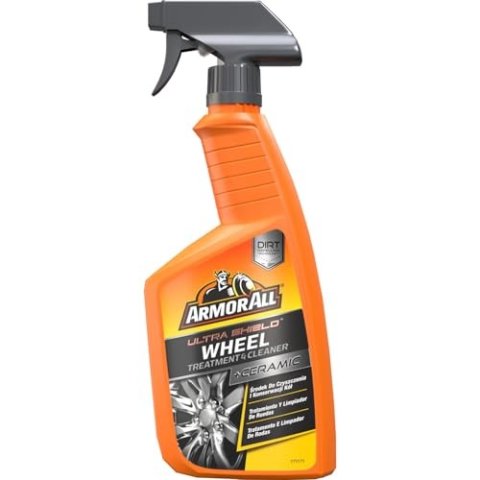
Dedicated wheel kit or broader car cleaning kit?
Choose a dedicated wheel kit when your main problem is barrel access, tight spokes or separating wheel and tyre tools. Choose a broader car cleaning kit when you also need wash mitts, drying towels and interior brushes — but check that its single wheel brush actually fits your wheels.
If you are building your first complete setup, use the MotorStash car cleaning kit checklist to cover bodywork, drying, glass and interior tools as well. The wheel kit should remain a separate dirty-work part of that wider setup.
Products to compare
More wheel and brush kits to compare
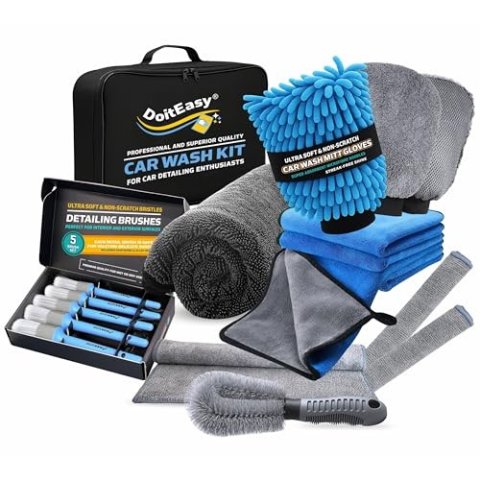 DoitEasy 15 Piece Car Cleaning and Detailing Kit with Drying Towel, Microfibre Towels, Wash Mitt, Alloy Wheel Brush and Interior Brushes
£22.99
DoitEasy 15 Piece Car Cleaning and Detailing Kit with Drying Towel, Microfibre Towels, Wash Mitt, Alloy Wheel Brush and Interior Brushes
£22.99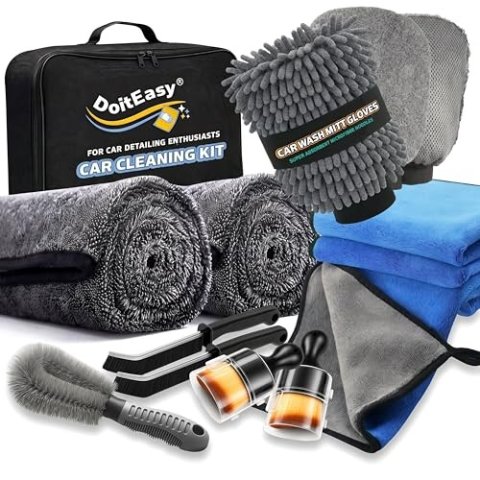 DoitEasy 12-Piece Car Cleaning Kit with Microfibre Towels, Wash Mitts, Wheel Brush and Detailing Brushes
£19.99
YeewayVeh 4-Piece Wheel and Tyre Cleaning Kit, Green
£17.99
In stock
Save 5%
Kazaigou 6-Piece Car Wheel Cleaning Brush Kit with Microfiber Wheel Woolies, Wash Mitt and Stone Remover Hook
£11.36
YeewayVeh 5-Piece Pro Wheel Detailing Kit, Green
£19.94
In stock
YeewayVeh 8-Piece Wheel and Tyre Brush Kit, Green (4 Pack)
£20.99
In stock
DoitEasy 12-Piece Car Cleaning Kit with Microfibre Towels, Wash Mitts, Wheel Brush and Detailing Brushes
£19.99
YeewayVeh 4-Piece Wheel and Tyre Cleaning Kit, Green
£17.99
In stock
Save 5%
Kazaigou 6-Piece Car Wheel Cleaning Brush Kit with Microfiber Wheel Woolies, Wash Mitt and Stone Remover Hook
£11.36
YeewayVeh 5-Piece Pro Wheel Detailing Kit, Green
£19.94
In stock
YeewayVeh 8-Piece Wheel and Tyre Brush Kit, Green (4 Pack)
£20.99
In stock
Wheel cleaning brush kit FAQs
What is the best brush type for alloy wheel faces?
A soft face brush or microfibre wheel mitt is the sensible starting point for broad visible surfaces. The right choice still depends on the wheel finish, contamination and manufacturer guidance.
What brush reaches the wheel barrel behind the spokes?
Use a long wheel woolie or flexible barrel brush. Choose a head that passes through the spoke gap without force and a length that reaches the rear of the barrel.
Are wheel woolies better than bristle brushes?
Not universally. Woolies are soft and efficient in open barrels, while flexible bristle brushes can work through tighter routes. Many wheel designs benefit from having both shapes in different sizes.
Can I use the same brush on tyres and alloy wheels?
It is better to keep a firmer tyre brush separate. A tool intended to scrub rubber may be too aggressive for a finished alloy face and can carry tyre grime back to the wheel.
Are wheel cleaning brush kits worth it?
They are useful when the set covers genuinely different jobs: face, barrel, small recesses and tyre. A high piece count alone is not a reason to buy.
How should wheel brushes be cleaned and stored?
Rinse them during and after use, remove trapped grit, let them dry and store them away from bodywork tools. Replace brushes with damaged tips, exposed wire or contamination that cannot be removed.