

Buying by volume
Buy the cleaner you will use, not the biggest pack
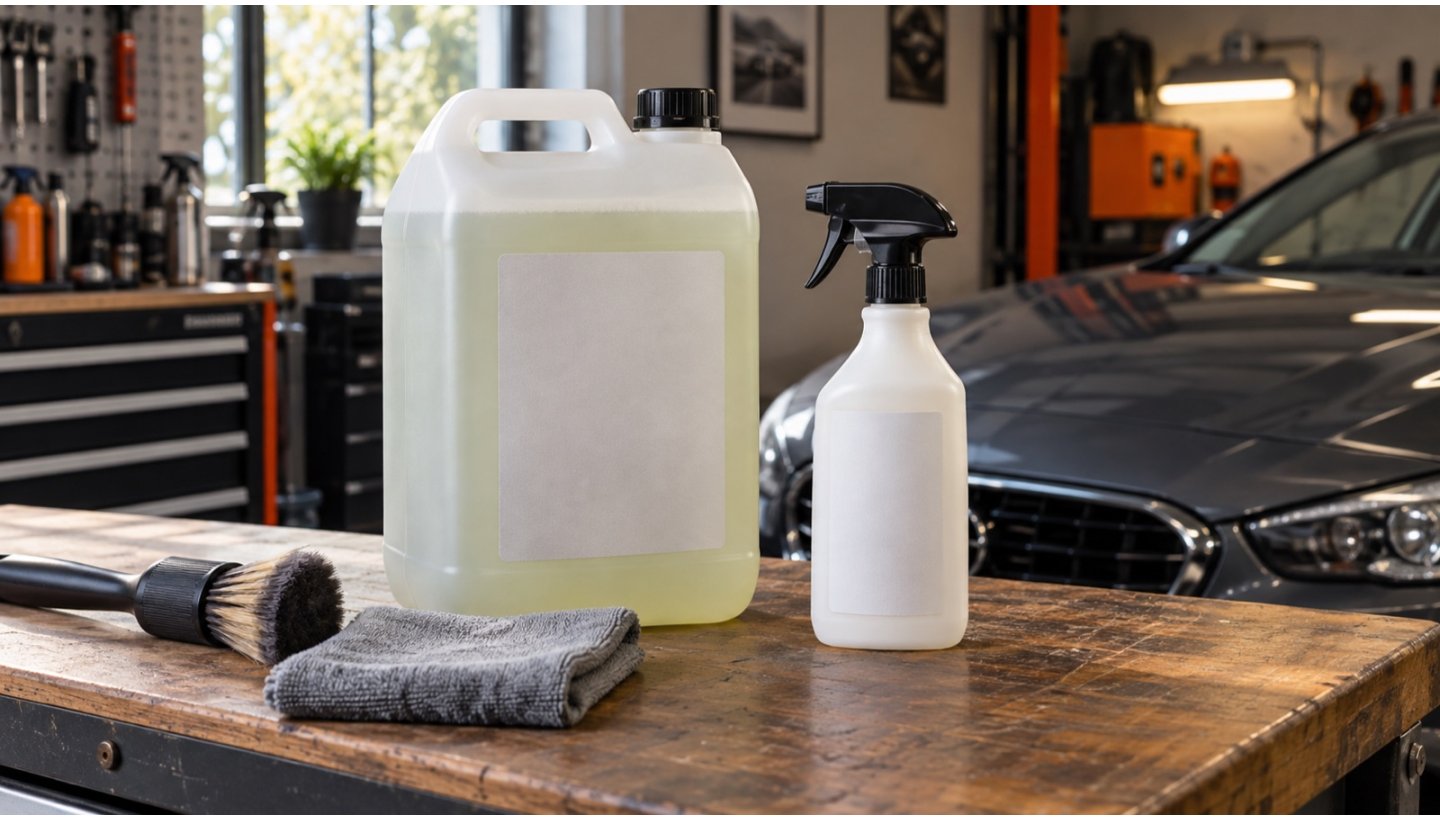
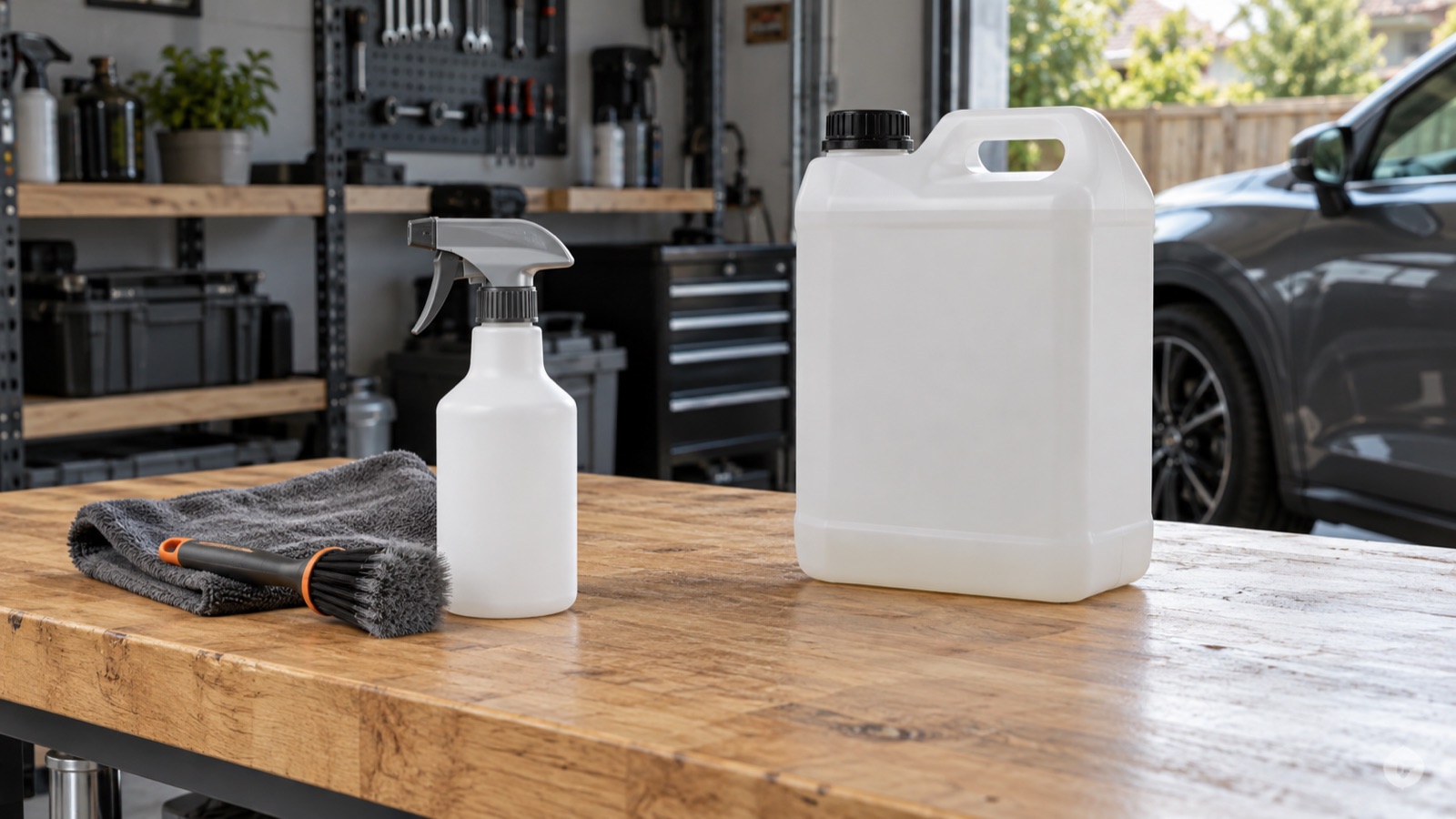
A 5L engine degreaser can look cheaper per litre while costing more for the job you actually have. A small trigger bottle may cover an occasional clean; a larger pack earns its place when you have a suitable refill setup and enough repeat work.
This guide compares the buying sums. If you still need to choose between spray, foam and other cleaning formats, start with our engine degreaser buying guide.
Quick answer
Bulk pays off when you use enough of the right formula
Compare the total you will spend on small bottles with the cost of a bulk pack and any suitable sprayer or measuring equipment. Use the strength specified for your actual cleaning job. A 5L pack is not automatically a concentrate, and a trigger bottle is not automatically ready to use.
Start with the amount you will actually use
There is no reliable universal allowance for one engine bay. The area, deposits, application method and instructions all affect consumption. Your previous use of the same cleaner is a better starting point than an assumed number of washes.
One occasional job
A smaller suitable pack limits the upfront spend and leftover fluid. Check whether it includes the applicator you need.
Repeated home use
Estimate how many small bottles you would otherwise buy. Include other jobs only when the same product label supports them.
Regular workshop use
Compare refill volume, equipment compatibility and storage with your actual consumption. A larger container alone does not establish suitability for a parts washer.
Work out the break-even point before buying 5L
The following example uses invented prices and consumption, not current offers or a recommended dose. Assume both options provide suitable cleaner at the same usable strength: a 500ml bottle costs £6, a 5L refill costs £25, and a compatible sprayer costs £5.
| Cleaner required | 500ml bottles at £6 | 5L refill plus £5 sprayer | Lower upfront spend |
|---|---|---|---|
| 0.5L | 1 bottle: £6 | £30 | Small bottle by £24 |
| 2L | 4 bottles: £24 | £30 | Small bottles by £6 |
| 2.5L | 5 bottles: £30 | £30 | Equal |
| 3L | 6 bottles: £36 | £30 | Bulk setup by £6 |
| 5L | 10 bottles: £60 | £30 | Bulk setup by £30 |
Here, the bulk setup starts saving cash when you would otherwise buy the sixth small bottle. If you already own a suitable sprayer, the bulk outlay falls to £25, so it becomes cheaper than buying five £6 bottles. Add any delivery or equipment costs that differ between the options.
For another purely illustrative calculation, using 250ml per job would mean twelve jobs consume 3L. That is arithmetic for this example, not a suggested amount per vehicle.
The leftover test
Unused cleaner is money still on the shelf
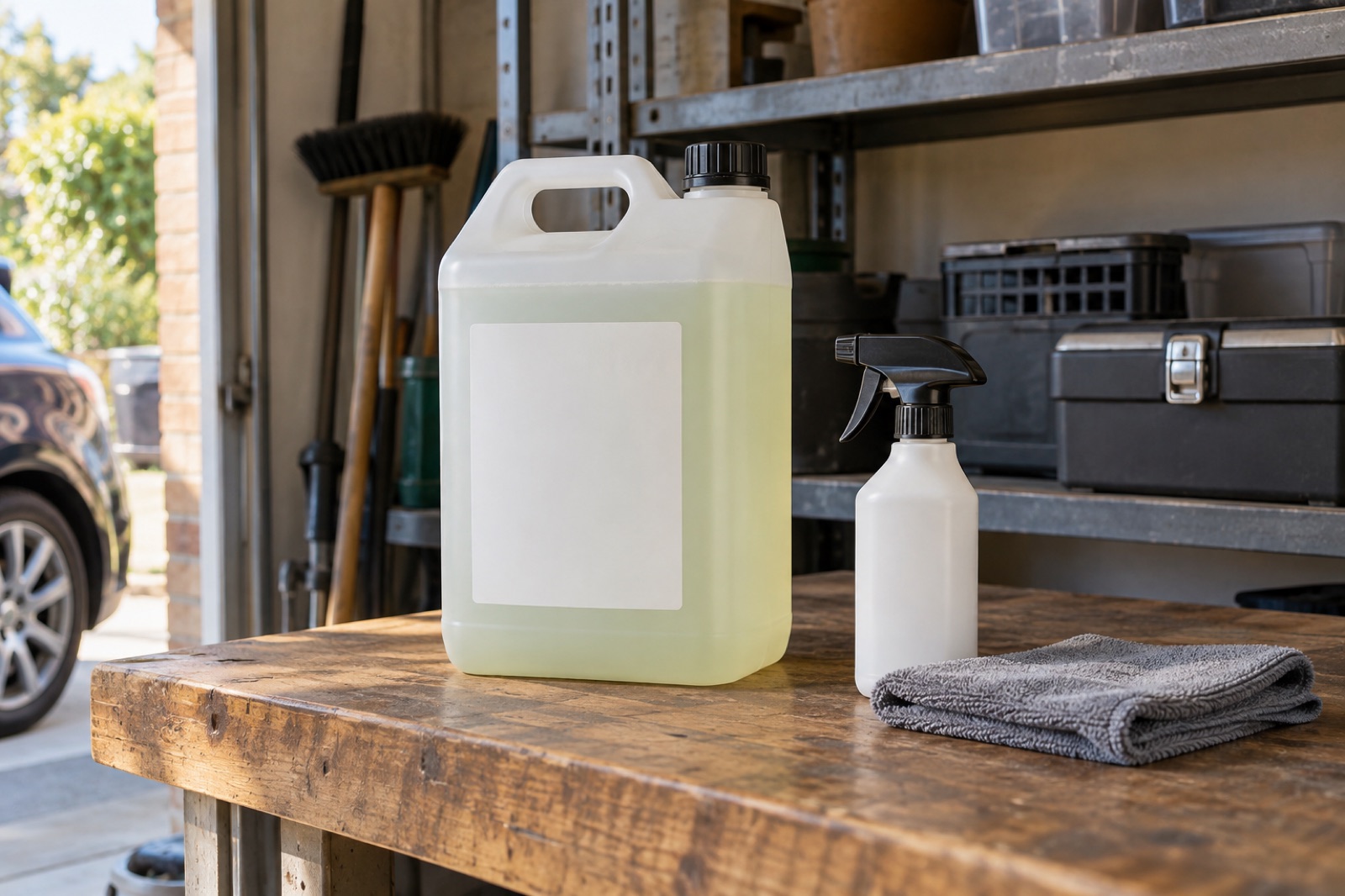
In the example, spending £30 to use only 500ml leaves 4.5L waiting for another job. The small bottle would have completed that requirement for £6.
That leftover fluid may be useful later, but do not count a hypothetical future use as an immediate saving. Consider available storage and the manufacturer's storage and shelf-life guidance. There is no single shelf life that applies to every degreaser.
Compare usable strength, not just bottle size
Volume tells you how much is in the pack. The label tells you whether to use it neat or dilute it, and for which task. Water-washable does not by itself mean water-based or suitable for dilution.
For example, XCP's manufacturer instructions specify neat use for degreasing. They separately allow one part product with up to ten parts water for general cleaning. Using the diluted-cleaning yield to calculate the cost of neat engine degreasing would exaggerate the saving.
Where dilution is expressly allowed for the job, calculate pack cost ÷ usable litres at that dilution. Then add equipment costs and compare equivalent applications. Write ratios in words: one part product plus four parts water makes five parts of solution. This explains the maths; it is not a mixing instruction for a listed product.
Keep grams and millilitres separate, too. If one listing gives mass and another gives volume, confirm the exact pack specification before calculating a price per litre.
Refill planning
Check the bottle, trigger and storage setup
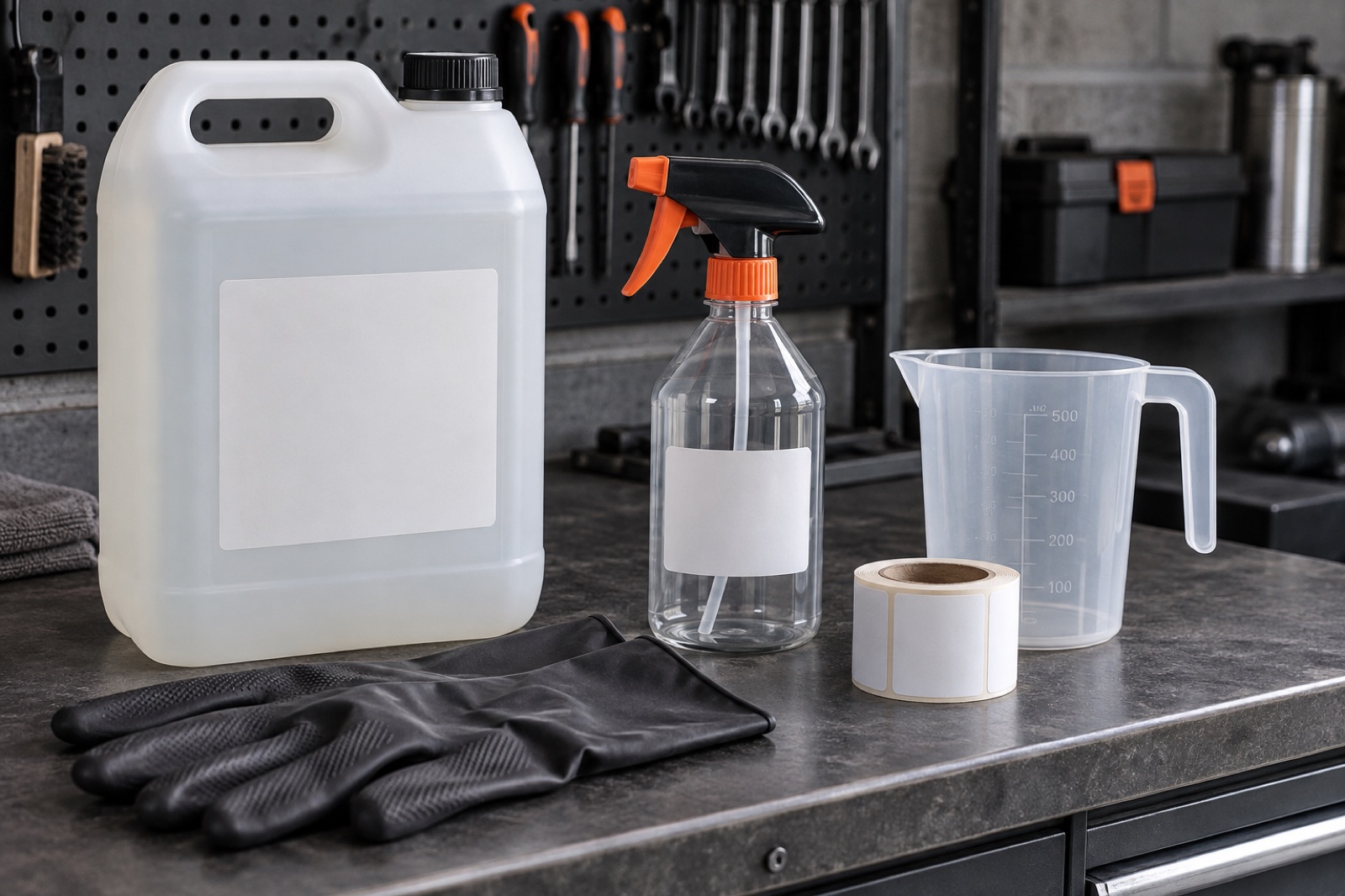
A cheap empty sprayer is not necessarily suitable for your cleaner. Confirm chemical compatibility for the bottle, seals and trigger, and whether the product permits spray application. Do not assume a leftover household spray bottle is a safe substitute.
Use dedicated measuring equipment only where mixing is instructed. Keep containers clearly identified, follow label storage directions, and never use food or drink containers. Include these practical costs before deciding that a refill is the cheaper purchase.
Small and bulk engine degreasers to compare
These are catalogue options for comparing pack formats, not a performance ranking or a claim that their formulas are interchangeable. Read the current retailer listing and product label before choosing.
CarPlan's ECL555 trigger is described as 500ml by Tetrosyl, while our imported listing uses 500g; verify the supplied pack rather than treating those units as equivalent. Showtime's trigger listing describes a concentrate, so the trigger format does not establish a ready-to-use formula.
Products to compare
Compare smaller packs and bulk refills
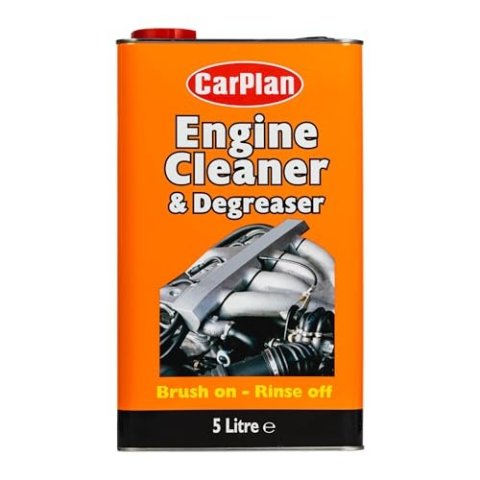 CarPlan Engine Cleaner and Degreaser 5L
£24.79
In stock
Save 5%
CarPlan Engine Cleaner and Degreaser 5L
£24.79
In stock
Save 5% 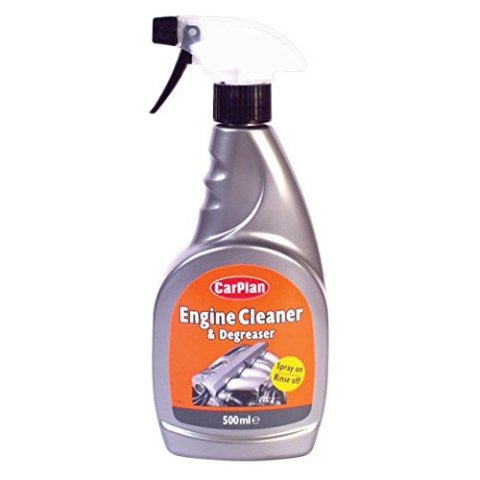 CarPlan ECL555 Engine Cleaner and Degreaser Trigger, 500 g (Pack of 1)
£7.60
CarPlan ECL555 Engine Cleaner and Degreaser Trigger, 500 g (Pack of 1)
£7.60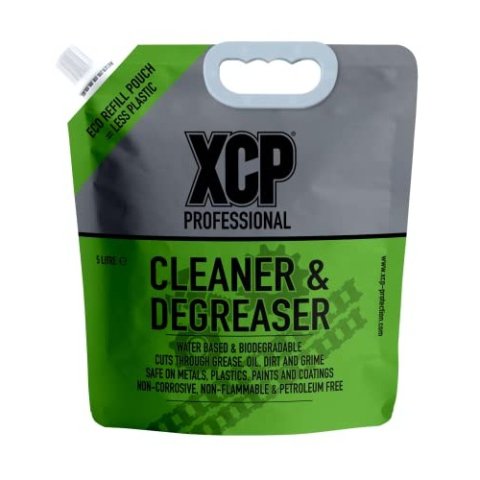 XCP Professional Cleaner & Degreaser 5 Litre
£22.89
In stock
XCP Professional Cleaner & Degreaser 5 Litre
£22.89
In stock
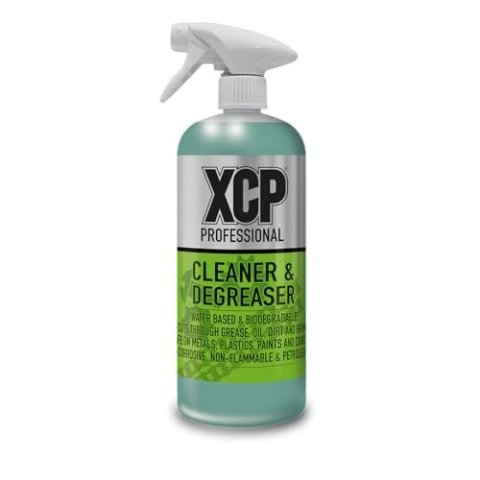 XCP Professional Cleaner & Degreaser 1 Litre
£12.19
In stock
XCP Professional Cleaner & Degreaser 1 Litre
£12.19
In stock
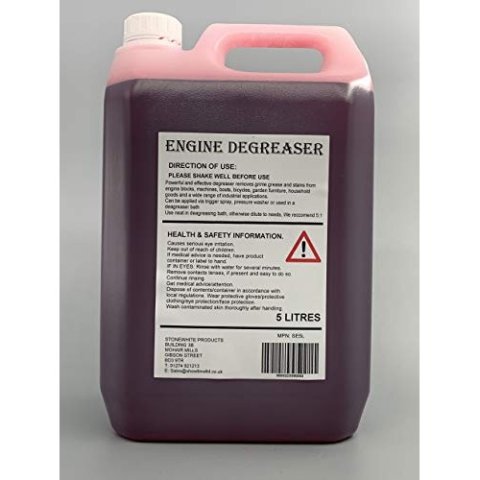 Showtime Chemicals Concentrate Engine Degreaser and Parts Washer Fluid, 5 Litres
£10.97
In stock
Showtime Chemicals Concentrate Engine Degreaser and Parts Washer Fluid, 5 Litres
£10.97
In stock
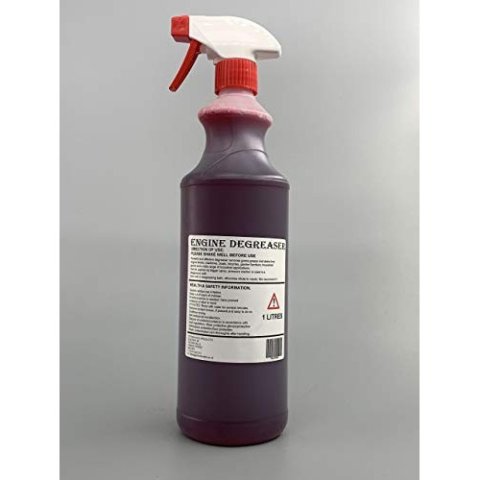 Showtime Chemicals Concentrate Engine Degreaser, 1 Litre Trigger
£6.85
In stock
Showtime Chemicals Concentrate Engine Degreaser, 1 Litre Trigger
£6.85
In stock
When a smaller pack is the sensible choice
You are trying a cleaner
Establish that the exact product suits your surfaces and job before buying more of it. Pack size is not evidence of compatibility.
You rarely use it
If you cannot identify enough suitable repeat jobs, a lower upfront spend may matter more than the nominal price per litre.
Your refill setup is uncertain
Choose a suitable supplied applicator rather than improvising with a bottle whose chemical resistance you do not know.
Storage is limited
Choose a quantity you can store according to its instructions, with the container closed and safely out of children's reach.
Before cleaning, follow the vehicle guidance and the cleaner's surface, protective-equipment, temperature and rinsing instructions. Avoid guessing around electrical components, intakes or unfamiliar finishes. Persistent oil deposits or a suspected leak need diagnosis; buying more degreaser does not repair the cause.
Questions before buying
Is a 5L engine degreaser always better value?
No. Compare actual outlay for the quantity you expect to use, including a suitable applicator. Bulk can offer a lower unit cost without being the cheaper purchase for one small job.
Is every trigger spray ready to use?
No. A trigger describes the dispenser. Check whether the contents are ready to use, concentrated or intended for different strengths on different jobs.
Can I dilute any degreaser to make it last longer?
Only dilute when the exact instructions allow it for the intended task. More litres of a weaker solution are not automatically an equivalent amount of effective degreaser.
Can I refill an aerosol from a 5L pack?
A conventional sealed aerosol can is not a refillable trigger bottle. Choose an application system explicitly suitable for the product rather than trying to refill or modify an aerosol.
Choose the pack that matches your next jobs
If repeated use makes the sums work, browse 5L degreasers. For a smaller purchase, compare degreaser sprays. If you specifically need adjustable strength, review concentrated degreasers and the instructions for each candidate.
Keep the sequence simple: suitable formula, realistic consumption, safe equipment, then price. The larger pack wins only when all four fit.